Hall G · Industry ExplainedHall B · Heavy Oil & Oil Sands
Calgary and the oil patch: how a city became Canada's energy capital
From a Turner Valley gas well in 1914 to Leduc No. 1 and the oil sands: how a ranching town on the Bow River became the head office city of the oil patch.
 By Harriet Dunleavy8 min read
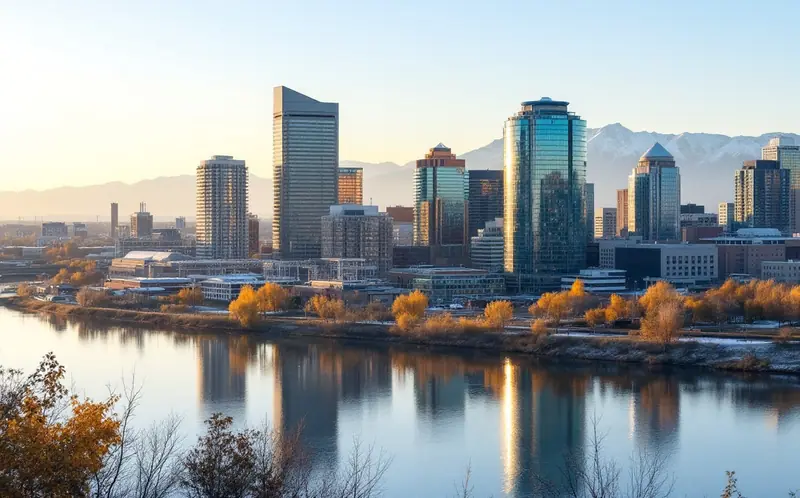
Calgary does not sit on top of a big oil field. There are no pumpjacks nodding in the downtown parking lots and no refinery stacks on the skyline. The wells are out in the foothills, on the plains, and far to the north in the oil sands. What Calgary has instead is the offices: the engineers, geologists, landmen, lawyers, bankers and executives who decide where the wells go. Getting there took most of a century, two big discoveries, several booms and some hard busts.
This is a short history of how that happened, told in the order it happened.
A ranching town with a fair
Before oil, Calgary was a railway and ranching town where the Bow and Elbow rivers meet. An agricultural society formed in 1884 and held its first fair in 1886, and by 1889 it had land on the banks of the Elbow River, the start of today's Stampede Park. The first Calgary Stampede rodeo ran in 1912, and in 1923 it merged with the city's industrial exhibition to form the Calgary Exhibition and Stampede, which has run every year since.
That matters to the oil story for a simple reason: when the oil money arrived, Calgary already had banks, lawyers and the habit of doing business with people who worked outdoors. The city was ready to be a head office before it had anything to be a head office of.
1914: the Dingman well and the first boom
On May 14, 1914, a well in Turner Valley, in the foothills south-west of Calgary, came in. It was drilled by Calgary Petroleum Products, a company put together by local rancher William Herron with drilling expert Archibald Dingman, and it became known as the Dingman well, or Dingman No. 1. It produced wet natural gas, rich in light liquids that could be separated out and sold as naphtha, a crude kind of gasoline. The company built a simple separator plant beside the well to do exactly that.
Wet gas is worth a moment of explanation. Gas that comes out of the ground is rarely pure methane. In many reservoirs it carries heavier hydrocarbons that turn to liquid when the pressure and temperature drop at the surface. Those liquids are valuable on their own, and in 1914 they were easier to sell than the gas, because there were few pipelines and few customers for large volumes of gas. That imbalance shaped the next twenty years in the valley.
The reaction in Calgary was a frenzy. Within weeks, hundreds of new oil companies had been formed and people lined up to buy their shares. Few of those companies ever drilled a well, fewer found anything, and many investors lost their savings. When war broke out in August 1914, the boom collapsed.
The field itself was real, though. In the early 1920s Imperial Oil bought Calgary Petroleum Products and set up Royalite Oil to run the plant and the drilling. In the mid-1920s a deeper well known as Royalite No. 4 found large volumes of gas and liquids with far more hydrogen sulfide than the earlier wells, and the plant was redesigned to scrub out the sour gas. If you have read our piece on H2S on site, you know why that was a serious engineering problem. Turner Valley was one of the first places anywhere to handle it at scale.
Flares in the valley and the birth of a regulator
Turner Valley's early producers wanted the liquids, not the gas. With no market large enough to take all of it, enormous amounts of gas were burned off in flares simply to get at the naphtha and, later, the oil. The waste was obvious to anyone standing in the valley at night.
After earlier attempts at control faded in the Depression, the Alberta government set up the Petroleum and Natural Gas Conservation Board in 1938 with the job of stopping wasteful flaring at Turner Valley. That board went through several names and much wider duties over the following decades, and its line runs to today's Alberta Energy Regulator. The habit of regulating production, spacing and flaring in Alberta started with the waste in one valley south of Calgary.
Through the 1930s, oil and gas work in Turner Valley was one of the few bright spots in a grim provincial economy. By the time the Second World War ended, though, the field was declining.
1947: Leduc No. 1 changes the map
Imperial Oil had spent years drilling dry holes across Western Canada. By one count, it had drilled 133 of them. On February 13, 1947, its Leduc No. 1 well, drilled on Mike Turta's farm south of Edmonton, came in with oil from Devonian reef rock. Leduc No. 2 soon found oil in a larger reef. The discovery gave geologists the key to Alberta's largest conventional oil fields, and the rush that followed spread across the province.
Leduc was much closer to Edmonton than to Calgary, and Edmonton grew fast as the field supply, refining and service town. But many oil companies had already set up their offices in Calgary during the Turner Valley years, and they did not move north. That split held for decades: Edmonton for the plants and service yards, Calgary for the head offices, the money and the geologists and engineers mapping out where the next wells would go.
The oil sands and Fort McMurray
The oil sands were always known about. Bitumen seeps along the Athabasca River had been described long before anyone had a way to make money from them. According to the Government of Alberta, the oil sands lie beneath about 142,200 square kilometres (some 54,900 square miles) of the province, in the Athabasca, Cold Lake and Peace River areas, and deposits up to about 75 m (250 ft) deep are shallow enough to mine. The province's oil sands facts and statistics page sets out the scale.
Commercial production began in 1967, when the Great Canadian Oil Sands plant (the start of what is now Suncor) opened near Fort McMurray. Syncrude followed in 1978. Fort McMurray, a small northern town before the plants, grew several times over in the years that followed, and it has boomed and slowed with every swing in oil prices since.
Deeper deposits cannot be mined, so companies developed in situ methods that heat the bitumen underground and pump it out through wells. Our explainer on steam-assisted gravity drainage covers the most common one.
The oil sands work happens hundreds of kilometres north of Calgary, but a lot of the planning, engineering and financing for it happens in Calgary towers. Several of the largest oil sands producers keep their head offices downtown.
Booms, busts and the towers
Calgary's skyline is a record of oil prices. The energy crises of the 1970s brought a flood of investment and a building boom, and the city's population grew quickly. Then, in the early 1980s, the federal government's National Energy Program and a fall in world oil prices ended the boom. Office projects stopped, jobs went, and Calgary's population fell for the first time in its history. Full recovery took until the 1990s.
The 1988 Winter Olympics put the city in front of a world audience, with the Olympic Saddledome on Stampede Park as one of the main venues. Later decades brought more swings. The oil price collapse that began in 2014 left downtown office towers with some of the highest vacancy rates in North America for years afterward.
Through all of it, Calgary kept its role. Greater Calgary has the second-largest number of corporate head offices in Canada among the country's largest companies, and the list includes producers, pipeline companies and the Canadian arms of international firms.
Stampede Park and the shows
Stampede Park, a short walk south-east of downtown, has always been about more than the July rodeo. Its exhibition halls host events all year, and for decades they hosted large oil and gas trade shows where drilling contractors, equipment makers and service companies set up their booths and parked full-size rigs outside. If you are planning a trip to an energy event in the city, our guide to planning a visit uses Calgary as its example.
A timeline you can keep
| Year | What happened |
|---|---|
| 1884 | Agricultural society formed in Calgary; its first fair follows in 1886 |
| 1912 | First Calgary Stampede rodeo |
| 1914 | Dingman well comes in at Turner Valley on May 14; a stock frenzy follows and collapses with the war |
| 1923 | Stampede and exhibition merge |
| 1938 | Petroleum and Natural Gas Conservation Board set up to stop waste at Turner Valley |
| 1947 | Leduc No. 1 comes in on February 13 |
| 1967 | First commercial oil sands plant opens near Fort McMurray |
| 1978 | Syncrude begins production |
| 1980s | National Energy Program and falling prices end the boom |
| 1985 | Turner Valley gas plant shuts down after about 70 years |
| 1988 | Calgary hosts the Winter Olympics |
| 2014 | Oil price collapse hits downtown offices hard |
What you can still see
Most of this history is visible if you know where to look.
- The Turner Valley Gas Plant is a provincial and national historic site. Much of the old plant still stands in the valley, a rare surviving example of an early gas processing site.
- At the Leduc No. 1 site, south of Edmonton, an interpretive center tells the story of the 1947 discovery.
- In Calgary itself, the evidence is in the towers, and in the names on the lobby directories of the downtown office buildings.
Paid link The box below is an affiliate placement. If you buy or enrol through it, Gas and Oil Expo may earn a commission at no extra cost to you. Partners never see or shape what we write.
Further reading
For the wider story of how oil shaped the modern world, Daniel Yergin's book The Prize is the standard general history. It covers the big international picture more than Alberta, but it explains why a discovery like Leduc mattered far beyond the province. Read it alongside a local history of Turner Valley or Leduc and the two fit together well.
The quickest way to understand Calgary's oil patch, though, is still a drive. Head south-west to Turner Valley, look at the old plant and the foothills around it, then drive back into the city and look up at the towers. The distance between the two is the whole story.

Harriet Dunleavy
Harriet is based in Pittsburgh, in the middle of Marcellus shale country. She writes about careers, training, conferences and trade shows, and about the history of the industry and the towns it built.