Hall D · Pipelines & Midstream
Pipeline integrity: corrosion, cathodic protection and inspection
What wears a buried steel pipeline down and how operators keep ahead of it: coatings, cathodic protection, smart pigs, pressure tests, direct assessment and 811.
 By Esteban Villarreal9 min read
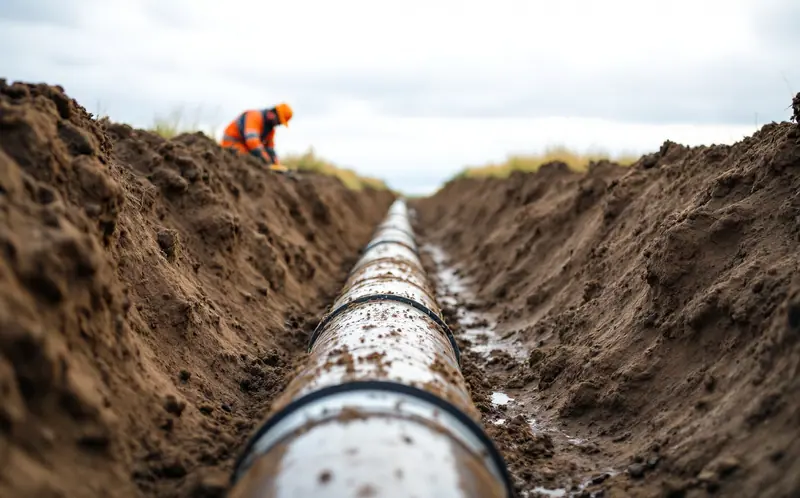
A buried steel pipeline looks finished the day the trench is backfilled. It is not. From that day on, the soil, the groundwater, the product inside, the ground itself and every backhoe that comes near the right-of-way are working on it. Pipeline integrity is the name for the long, mostly unglamorous job of knowing what condition the pipe is in and fixing problems before they turn into leaks or ruptures.
In the US, PHMSA runs the federal safety program for roughly 3.3 million miles of pipelines, with the rules in Title 49 of the Code of Federal Regulations, Parts 190 to 199. In Canada, lines that cross a provincial, territorial or national border fall under the Canada Energy Regulator, whose Onshore Pipeline Regulations require each company to run an integrity management program and point to CSA Z662, the national standard for oil and gas pipeline systems. Provincial regulators cover lines inside a single province. The details differ, but the logic is the same everywhere: find the threats, protect the pipe, inspect it, repair what you find and keep the records.
What actually threatens a pipeline
US gas transmission rules, in 49 CFR 192.917, group the threats an operator has to consider into a few families. The grouping is a useful way to think about any pipeline.
| Threat family | Examples | How it shows up |
|---|---|---|
| Time-dependent | External corrosion, internal corrosion, stress corrosion cracking | Gets worse every year it is left alone |
| Stable | Defects from manufacturing, welding, fabrication or construction | Present from day one, may become a problem under changed pressure |
| Time-independent | Third-party and mechanical damage, incorrect operation, weather and outside force (including ground movement and soil stability) | Can happen on any given day |
| Human error | Mistakes in operation, maintenance, design or construction | Runs through all of the above |
Corrosion gets most of the attention because it never stops. External corrosion attacks the outside of the pipe where the coating has failed and the steel touches wet soil. Internal corrosion works from the inside, typically where water collects in low spots or where the product carries corrosive contaminants. Stress corrosion cracking is the subtle one: fine cracks that grow where stress on the steel and a corrosive environment act together, and they can be hard to see until they are long enough to matter.
The time-independent threats are different in kind. A pipe can be in perfect condition and still be punctured by an excavator bucket or bent by a slope that starts to slide after a wet spring.
The first line: coatings
A coating keeps water and soil off the steel. Modern lines are usually coated in the mill before the pipe ever reaches the right-of-way. Fusion-bonded epoxy, introduced in the early 1960s, is applied as a powder to heated pipe, where it melts and cures into a hard film, and it is often used as a primer under thicker multilayer polyolefin coatings. When the pipe is welded together in the field, the bare area at each joint is coated on site, and those field joints are a well-known weak point if the work is rushed. The welding demonstrations guide shows what goes into the joint itself.
No coating is perfect. There will be small gaps in the film, damage from rocks in the backfill, and areas that age and disbond over decades. That is why coatings are almost always paired with a second system.
The second line: cathodic protection
Corrosion is an electrochemical reaction. Where steel touches an electrolyte such as damp soil, metal atoms give up electrons and leave the pipe as ions, and a small current flows from the pipe into the ground. PHMSA's cathodic protection fact sheet explains the fix in plain terms: supply the pipe with a new source of electrons, so the steel stops giving up its own.
There are two ways to do it.
- Sacrificial (galvanic) anodes. Blocks of a more active metal, usually magnesium, zinc or aluminum alloy, are buried near the pipe and connected to it. The anode corrodes instead of the pipe. This suits shorter, smaller lines and spots that need a local boost.
- Impressed current. A rectifier turns AC power into DC and drives current from a bed of anodes, often buried in a deep hole or trench with conductive coke backfill, through the soil to the pipe.
Along the line you will see test posts, small posts with a cap and terminals, where a technician can connect a meter and a reference electrode and measure the pipe-to-soil potential. Those readings show whether the protection is reaching the pipe. US rules require cathodic protection to be tested at least once a year, rectifiers to be checked six times a year at intervals of no more than two and a half months, and problems to be corrected in a timely way. Gas lines installed after July 31, 1971 must be coated and cathodically protected. Records of the system are kept for the life of the pipeline.
Cathodic protection has limits. It does nothing for atmospheric corrosion on pipe above ground, or for corrosion caused by what flows inside the line. Those need other measures, such as coatings and inspection on pipe above ground and, inside the line, keeping water out and cleaning it regularly.
Looking inside: in-line inspection
On a piggable line, the main way to check the whole length is an in-line inspection tool, the smart pig. Magnetic flux leakage tools measure metal loss from corrosion and gouges. Ultrasonic tools measure wall thickness directly, or, in the shear wave version, look for cracks, including stress corrosion cracking. Geometry tools map dents and ovality. Our pigging explainer walks through how a run works and why some lines cannot take a tool.
The tool's report lists features by distance along the line and position around the pipe, with estimated depth and length. The operator then decides which features need to be dug up and examined, which can be watched, and which are minor. US rules set response criteria for different kinds of features. For hazardous liquid lines, for example, the remediation criteria for dents depend on both their depth and their orientation, which is why geometry tools are expected to report those values.
Pressure testing
A hydrostatic test fills a section of pipe with water and raises it well above its operating pressure for a set time. If the pipe has a defect that would fail near operating pressure, the test is meant to make it fail, with water rather than product in the line. For new steel gas pipe that will operate at 30 percent or more of its specified minimum yield strength, 49 CFR 192.505 requires the strength test to be held for at least 8 hours. For hazardous liquid lines, 49 CFR 195.304 sets the test at 125 percent or more of the maximum operating pressure for at least 4 continuous hours, plus 4 more hours at 110 percent if the line is not visually checked for leaks during the test.
Pressure tests are useful where a line is too small for in-line tools (around six inches is the usual lower limit for many of them) or cannot be pigged for other reasons. Their drawbacks are real: the line has to come out of service, large volumes of water have to be sourced, treated and disposed of, and a pass shows the pipe was sound at that pressure on that day without saying much about defects that did not fail.
Direct assessment
Direct assessment is the method for lines that can be neither pigged nor easily tested. For external corrosion, US gas rules in 49 CFR 192.925 lay out four steps:
- Pre-assessment: gather records on the line's history, coating, soils and cathodic protection, and divide it into regions.
- Indirect inspection: walk the line with at least two different, complementary above-ground survey tools that look for coating damage and gaps in protection.
- Direct examination: dig at the spots the surveys flag, measure any corrosion, and work out its cause.
- Post assessment: judge whether the method is working and whether the segment needs reassessing sooner.
It takes more judgment than a tool run, because it relies on surveys and a limited number of digs to stand in for the whole line.
Integrity management programs
All of the above sits inside an integrity management program. In the US, operators of hazardous liquid and gas transmission lines have to identify the segments that could affect high consequence areas, such as populated places, drinking water sources and sensitive environments, rank those segments by risk, assess them with one or more of the methods above, and repeat the assessment on a schedule. For gas transmission covered segments, 49 CFR 192.939 sets a maximum reassessment interval of 7 calendar years by an allowed method, with limited exceptions. In Canada, the CER requires companies to develop, implement and maintain an integrity management program, and to audit it internally at least every three years.
The program is where the data comes together: in-line inspection results, cathodic protection readings, dig reports, leak history, patrol notes and records of who has been digging near the line.
A worked example: from tool report to repair
Here is how the pieces fit, in an illustrative case with made-up round numbers. An operator runs a magnetic flux leakage tool through a 20-inch gas line. The report lists a cluster of external metal loss features about 14 km (9 mi) from the launcher, with the deepest estimated at a little under half the wall thickness.
The integrity engineer checks the feature against the response criteria and the line's operating pressure, and schedules an excavation. The one-call notification goes in, other buried facilities are located, and a crew digs a bell hole under the operator's ground disturbance procedures. With the pipe exposed, a technician removes the coating locally and measures the actual corrosion with ultrasonic and depth gauges, then compares it with the tool's estimate. That comparison matters, because it tells the operator how far to trust the rest of the report.
The cause turns out to be a disbonded field joint coating that let groundwater in. The corrosion is deep enough to need a repair, so a qualified crew installs a reinforcing sleeve under the operator's procedures, the area is recoated, and the cathodic protection readings at the nearest test posts are reviewed to see why protection was not reaching that spot. The dig report goes back into the integrity program, and the engineer looks at other field joints from the same construction season to see whether the same problem may be repeating along the line.
Before anyone digs: 811 and one-call
Third-party damage is the threat the public can do the most about. In the US, 811 is the free national number that routes a caller to the local one-call center, which notifies the companies whose lines are nearby so they can mark them with paint or flags before any digging. How much notice is required varies by state. In Canada, Click Before You Dig and the provincial one-call services do the same job. For federally regulated lines, the CER's damage prevention rules set a prescribed area of 30 m on each side of the pipeline's centerline, and digging 30 cm or deeper inside it needs the pipeline company's written consent.
The marks are approximate, so the safe practice is to dig carefully around them, not over them, and to follow the pipeline company's instructions on hand exposure and supervision.
Why this is a career in itself
Integrity work pulls together corrosion specialists, cathodic protection technicians, in-line inspection analysts, dig crews, data people and engineers. Many of the field roles come with their own certifications, and AMPP, formed in 2021 when NACE International and SSPC merged, is the association behind much of the corrosion and coatings training. If that sounds like your kind of work, our guide to starting a career in oil and gas covers the entry routes.
The habit that separates good integrity programs from weak ones is simple: every dig gets compared with what the tool, the survey or the records predicted, and the difference is written down and used.

Esteban Villarreal
Esteban is from Corpus Christi, Texas, and writes about pipelines, terminals and refining along the Gulf Coast and beyond. He likes a good process diagram and a clear answer to where the barrel goes next.