Starting a career in oil and gas: entry routes, tickets and training
Field crews, trades and office roles each have their own way in. How people start in oil and gas: the jobs, the safety tickets, apprenticeships and courses.
 By Harriet Dunleavy9 min read
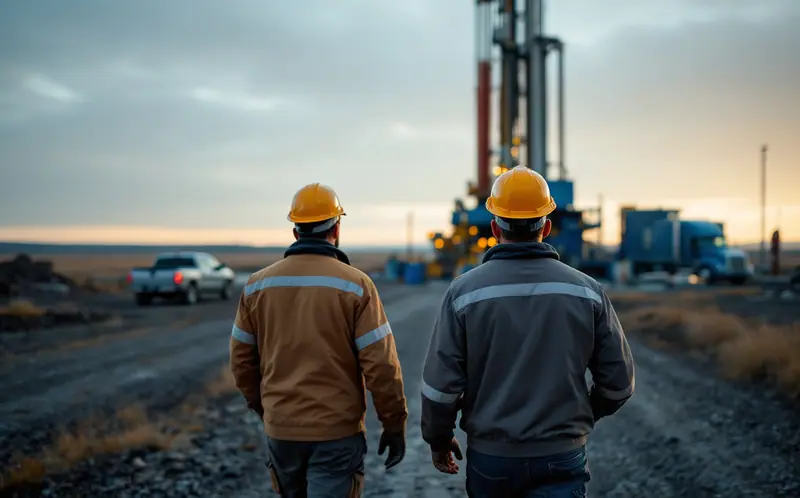
People get into oil and gas in more ways than the stories suggest. Some answer a call for a floorhand on a rig crew with a pair of steel-toe boots and a handful of safety tickets. Some finish a welding apprenticeship and follow pipeline work. Some come out of university with a geology degree, and some move over from trucking, the military, farming or a hospital lab. The industry needs all of them, and each route has its own front door.
This piece walks through the main entry routes, the safety training that almost every field job expects, and how to tell which path fits you. It does not cover pay. Wages swing with the price of oil, the region and the employer, and any number printed here would be wrong somewhere.
Two halves of one industry
It helps to split the work into two broad groups.
Field roles are the people on leases, rigs, plants, pipelines and offshore installations: rig crews, equipment operators, plant operators, service technicians, and the skilled trades who build and maintain everything. Field work usually means early starts, outdoor weather, long shifts and, for many jobs, a rotation where you work a block of days in a row and then get a block off. The exact pattern depends on the employer and the site.
Office and technical roles are the engineers, geoscientists, health, safety and environment (HSE) staff, supply chain buyers, land and regulatory staff, and the accountants, data people and lawyers behind them. Most of these jobs need a college diploma or university degree, and many involve some field visits.
The line between the two is not fixed. Plenty of engineers start on a rig as summer students, and plenty of operators move into supervision, planning or safety roles after some years in the field.
Roles and how people usually get in
The table is a rough map, not a rule. Entry requirements change between employers, provinces and states.
| Role | What the work is | Typical way in |
|---|---|---|
| Floorhand (rig crew) | Handling pipe and tools on the drill floor, rig moves, maintenance | Entry level; safety tickets, a driver's licence, good health and a willingness to learn |
| Leasehand or labourer | General work on a lease or plant site, cleanup, helping crews | Entry level, sometimes the first step before a rig job |
| Field or plant operator | Running wells, batteries, compressor stations or gas plants | College program (in Canada often power engineering), or promotion from field work |
| Service technician | Wireline, cementing, fracturing, coiled tubing and other service lines | Hired by service companies, trained in-house, often after a trade or diploma |
| Welder | Fabrication, pipeline and facility welding | Apprenticeship and trade certification |
| Millwright | Installing and maintaining pumps, compressors and rotating equipment | Apprenticeship and trade certification |
| Electrician | Power distribution, motors, plant electrical systems | Apprenticeship and trade certification |
| Instrumentation technician | Transmitters, control valves, analyzers, control systems | Apprenticeship or a technologist diploma |
| Engineer | Drilling, completions, production, reservoir, facilities, pipelines | Engineering degree, then professional registration after supervised experience |
| Geoscientist | Mapping rock, picking well locations, interpreting seismic | Geology or geophysics degree, then professional registration |
| HSE advisor | Safety programs, incident investigation, environmental compliance | Diploma or degree in safety or environmental science, often field experience first |
| Supply chain | Buying equipment and services, contracts, logistics | Business diploma or degree, or moving up from warehouse and expediting work |
| Land and regulatory | Surface access agreements, permits, working with landowners and regulators | Diploma or degree in land management or a related field |
A word on titles: the same job can have three names depending on where you are. A floorhand in Alberta is a roughneck in plenty of other places, and "operator" can mean anything from a junior field role to the person in charge of a gas plant.
Safety tickets come first
On most field sites, nobody lets you through the gate without proof of basic safety training. These short courses are usually called tickets in Canada and cards or certificates in the US. Employers often pay for them once you are hired, but having the common ones already makes your resume easier to say yes to.
In Canada
- H2S Alive, delivered through Energy Safety Canada and its approved trainers, covers hydrogen sulfide hazards, detection, protective breathing equipment and the basic response to a release. Much of Western Canada's gas is sour, so this one comes up almost everywhere. Our piece on hydrogen sulfide on site explains why it matters.
- First aid with CPR, from a recognized provider.
- WHMIS, the Workplace Hazardous Materials Information System, which covers labels, safety data sheets and worker training for hazardous products. The CCOHS overview of WHMIS is a clear place to start.
- Site-specific tickets such as ground disturbance, fall protection, confined space awareness or transportation of dangerous goods, depending on the job.
Certificates expire. Keep a folder with copies and renewal dates, because a lapsed ticket can keep you off a site on the morning you are supposed to start.
In the US
Federal rules put the duty to train on employers, and much of the training is done by the company and its contractors. Many workers also hold a card from the OSHA Outreach Training Program, either the 10-hour class (general hazard awareness for workers) or the 30-hour class (aimed at supervisors and people with safety duties). OSHA is clear that the program is voluntary, that the card is not a certification or licence, and that it does not satisfy the training requirements of any OSHA standard. Some employers, unions and states require it anyway. The OSHA Outreach Training Program page explains what the cards are and how to check a trainer is authorized.
Offshore
Offshore work adds survival training. In the North Sea and many other regions, the standard entry course is the OPITO Basic Offshore Safety Induction and Emergency Training, known as BOSIET, which covers safety induction, sea survival, firefighting, first aid and helicopter escape. It is renewed with a shorter refresher course. Offshore wind uses a separate set of standards from the Global Wind Organisation (GWO), which is worth knowing if you are open to work on either kind of installation.
Training is general education, not permission to do a task. On any site, the permits, procedures and the qualified people around you decide what you can do.
Apprenticeships and trades
The skilled trades are one of the steadiest routes into the industry, because a certified welder, millwright, electrician or instrumentation technician can work on rigs, plants, pipelines, refineries and far outside oil and gas too.
An apprenticeship mixes paid work under a certified journeyperson with blocks of classroom training at a college or trade school. In Canada, trades are regulated by each province, and many carry the Red Seal endorsement, which you can earn by passing an interprovincial exam once you finish your apprenticeship. It helps a tradesperson move between provinces. Welder, millwright and pipefitter are among the Red Seal trades. In the US, registered apprenticeships run through employers, unions and state agencies, and the details differ from state to state.
A practical walk-through for someone starting from zero:
- Pick a trade by spending a day with someone in it, or by taking a short pre-apprenticeship course at a college.
- Find a sponsor: an employer willing to register you as an apprentice. Union halls, contractors and maintenance shops are the usual places.
- Register with the provincial or state apprenticeship office.
- Work your hours, attend your classroom blocks and pass each level's exam.
- Write the final certification exam, and in Canada, the Red Seal exam where it applies.
It takes years, not months, and the early levels are not glamorous. But a journeyperson ticket is portable in a way few other qualifications are.
Degrees, registration and graduate programs
For engineering and geoscience, the route runs through a degree. Petroleum engineering is the obvious one, but chemical, mechanical, civil and electrical engineers fill many oil and gas jobs, and geology and geophysics graduates work in exploration and development.
In Canada and the US you cannot call yourself a professional engineer or geoscientist until you are registered with the regulator in your province or state, which normally requires an accredited degree, a period of supervised work experience and an exam. Many large operators and service companies run graduate programs that rotate new hires through several teams over their first years. Summer and co-op work terms are the usual way into those programs, so students should start applying early in their degree.
HSE, supply chain and land roles are open to a wider range of diplomas and degrees, and many people move into them after time in the field.
Courses you can take now
If you are still deciding, short courses are a cheap way to test your interest before committing to a program.
- Community and technical colleges in energy regions run evening and weekend classes on oil and gas basics, safety tickets and pre-apprenticeship programs.
- Several universities offer online courses on petroleum geology, drilling basics, energy economics and the energy transition. Some can be audited for free, and some lead to a certificate.
- Industry associations and training bodies publish free introductions to their sectors, and some of their courses are recognized by employers.
Online courses will not replace hands-on training or tickets, and no employer will hire you as an operator on the strength of a video lecture. What they do is give you the vocabulary, which makes interviews and your first weeks far less bewildering. There are suggestions in our reading room.
Paid link The box below is an affiliate placement. If you buy or enrol through it, Gas and Oil Expo may earn a commission at no extra cost to you. Partners never see or shape what we write.
Getting in front of employers
Most hiring happens through online postings, staffing agencies, referrals and campus recruiting. Two other routes are underused.
The first is trade shows. Big energy shows put hundreds of companies in one building, and many have staff who are happy to talk to a student or career changer during a quiet hour. Go with a short list and a specific question. Our guide to working a trade show floor in one day has a plan you can adapt.
The second is the people already in the work. A neighbour on a rig crew or a relative in a gas plant can tell you more in an hour than any job board, including which companies treat new hands well. Ask what their first year was like.
Whatever route you take, show up with tickets current, a clean driving record where the job calls for one, and the attitude of someone who wants to learn the job properly. More resumes go in the bin for a missing ticket than for a missing degree. You can find more on training and entry routes in our careers and training hall.
Questions people ask
Do I need experience to get a field job?
Not always. Floorhand, leasehand and labourer jobs are entry roles, and crews expect to train new hands. What they want to see is basic safety tickets, a driver's licence for many positions, reliability and a willingness to work in rough weather.
Is a rotation hard on family life?
It can be. A rotation gives you long stretches at home, but it also means missing birthdays and school events during work blocks. Talk it through with the people at home before you accept a rotational job.
Can I move from the field into an office role later?
Yes, and many people do. Field experience is valued in planning, safety, supervision and supply chain. Some move after taking a diploma or degree part-time, often with help from their employer.
Are online courses enough to get hired?
On their own, rarely. They are useful for learning the basics and showing interest, but field jobs need tickets and trades need apprenticeships. Use online courses alongside those, not instead of them.

Harriet Dunleavy
Harriet is based in Pittsburgh, in the middle of Marcellus shale country. She writes about careers, training, conferences and trade shows, and about the history of the industry and the towns it built.