
Home / Guide
Guide
The oil and gas supply chain, by product and service category
Who supplies the oil patch: drilling and completions, pumps, valves, pipe, controls, logistics, environmental and safety services, explained category by category.
 By Esteban VillarrealFirst posted at this address on 7 min read
Pick up the directory of any large oil and gas trade show and the first thing you notice is the index at the back: a long list of product and service categories, each followed by a column of company names. It can look like a phone book. Read it as a map instead. Those categories are a fairly complete picture of how the industry buys what it needs, from the rig on the lease to the truck that hauls the crew camp to the next job.
This guide walks through the main categories in roughly the order the work happens, says what each group sells, who usually buys it, and what a sensible visitor might ask. No company names, just the shape of the supply chain.
Drilling: surface and wellbore equipment
Drilling suppliers cover everything from the rig itself to the tools at the bottom of the hole. On the surface that means drawworks, top drives, mud pumps, blowout preventers and the solids control equipment that cleans drilling fluid. Downhole it means bits, drill collars, motors, stabilizers and the directional tools that steer a well. Drilling fluid companies sell the mud and the people who manage it. Buyers are drilling contractors and the operators' drilling engineers.
Good questions: what hole sizes and well types the tool is built for, how it is serviced between wells, and where the nearest service shop is. If the rig itself is new to you, our walk through how a land drilling rig works puts the parts in order.
Completions, well testing, wireline and workover
Once the hole is drilled, a different set of suppliers takes over. Completions companies sell packers, liner hangers, sliding sleeves, perforating systems and the equipment and crews for fracturing and cementing. Well testing firms bring separators, flare stacks and measurement to flow a new well and see what it can do. Wireline companies lower instruments and tools on cable to log the well, set plugs or perforate. Workover and service rig contractors come back later to pull tubing, change out pumps and repair wells that are already producing.
Buyers here are completions and production engineers and field superintendents. Ask about crew availability, what the tool has been run in before, and what happens if it gets stuck.
Pumps, compressors and valves
Rotating equipment is a category of its own. Pumps move oil, water and chemicals at every scale, from small chemical injection pumps on a wellsite to large pipeline pumps. Compressors push gas from the field into gathering systems and along transmission lines. Valve makers and distributors supply gate, ball, globe, check and control valves in every size and pressure class, along with the actuators that open and close them.
Buyers are facilities engineers, maintenance planners and procurement staff. Ask about lead times, spare parts, the service network, and which standards the product is built and tested to.
Pipe: casing, tubing, line pipe and fittings
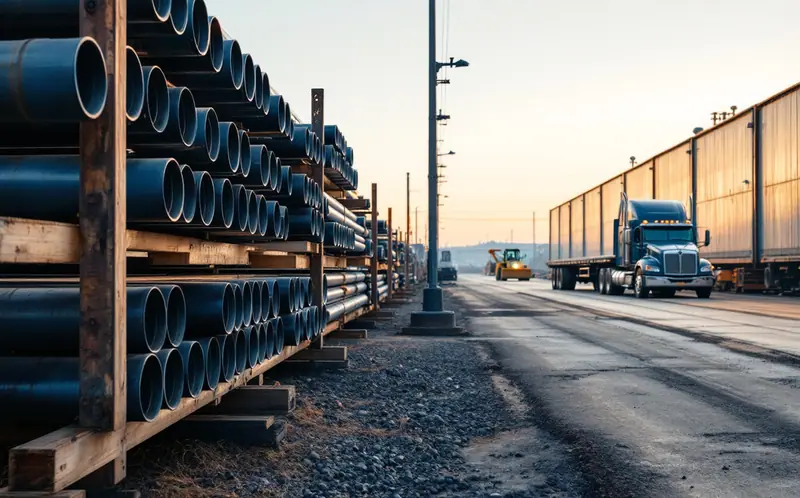
Steel pipe is the single most visible product in the industry. Casing lines the wellbore and tubing carries production up inside it, and both are commonly made to API Specification 5CT. Line pipe for gathering and transmission systems is commonly made to API Specification 5L. Around them is a large trade in fittings, flanges, couplings and pup joints, plus coating and inspection services for pipe before it goes in the ground. Mills make the pipe; distributors and pipe yards stock it and cut it to order.
Ask which specification and grade the pipe is made to, how it is inspected, what the mill test reports show, and how it is stored and handled before delivery.
Instrumentation, controls, data and software
Every modern well, plant and pipeline is watched by sensors and run through control systems. Suppliers in this group sell pressure, temperature and flow instruments, gas analyzers, programmable controllers, remote terminal units, radios and satellite links, and the control room software that ties it together. Next to them sit data and software companies: reservoir modeling, drilling data, production accounting, maintenance management and pipeline leak detection.
Buyers include automation and controls engineers, IT and operations staff. Ask how the system connects to what the buyer already runs, who supports it at three in the morning, and how data is protected.
Engineering, consulting, construction and fabrication
Engineering firms design facilities, pipelines and well programs. Consultants cover regulatory filings, environmental assessments, reservoir studies and safety reviews. Construction contractors build the plants and lay the pipe, and fabricators build skids, pressure vessels, tanks and modules in shops so they arrive on site ready to set. Pipeline welding sits here too, and the welding demonstrations guide explains what a show-floor demo of that work is showing you.
Ask about similar projects completed, the size of the crew or shop, quality control and safety records.
Transportation and logistics
Nothing in the oil patch stays where it is. Heavy haul carriers move modules and large equipment on specialized trailers. Rig moving companies break down a rig, move it down the road and stand it back up. Other firms handle fluid hauling, crew transport, freight forwarding for international shipments and yard storage. Buyers are logistics coordinators and drilling and construction managers. Ask about permits for oversize loads, winter and spring road restrictions, and how a move is planned.
Environmental services
Environmental suppliers handle air and water monitoring, spill response and clean up, waste management, water sourcing and treatment, and reclamation of old sites back to their prior land use. Some sell equipment, such as gas detection cameras and water treatment units, and others sell field crews and laboratory work. Buyers are environmental coordinators and regulatory staff. Ask what the regulator in that jurisdiction requires, how results are reported, and how quickly a crew can respond.
Health and safety
This category covers protective clothing such as flame-resistant coveralls, hard hats, boots, gloves and eye protection; fixed and personal gas detection, including hydrogen sulfide monitors; breathing apparatus; fall protection; first aid supplies; and safety training and consulting. Buyers are safety advisors and field supervisors. Ask about certification of the gear, maintenance and calibration, and the training needed before anyone relies on it.
Power, camps, remote services and recruitment
Remote sites need power, so generator and power system suppliers sell and rent gensets, lighting towers and electrical distribution. Camp companies supply and run accommodation, kitchens and housekeeping for crews far from town. Remote services can include water, waste, medical support and communications. Recruitment and staffing firms supply people, from field hands to specialist engineers, on contract or permanent terms. Ask about capacity, lead time and how they handle a job that grows or shrinks.
The categories at a glance
| Category | What they supply | Typical buyer |
|---|---|---|
| Drilling equipment | Rig components, bits, downhole tools, drilling fluids | Drilling contractors, drilling engineers |
| Completions and well testing | Packers, perforating, fracturing, separators and flow testing | Completions and production engineers |
| Wireline and workover | Logging, plugs, service rigs, well repair | Production and operations staff |
| Pumps, compressors, valves | Rotating equipment, valves, actuators | Facilities and maintenance engineers |
| Pipe and fittings | Casing, tubing, line pipe, flanges, coatings | Procurement, drilling and pipeline engineers |
| Instrumentation and software | Sensors, controls, communications, data systems | Automation, IT and operations staff |
| Engineering and construction | Design, consulting, construction, fabrication | Project managers |
| Transportation and logistics | Heavy haul, rig moves, fluid hauling | Logistics and field managers |
| Environmental services | Monitoring, spill response, water, reclamation | Environmental and regulatory staff |
| Health and safety | Protective clothing, gas detection, training | Safety advisors, supervisors |
| Power, camps, recruitment | Generators, accommodation, remote services, staffing | Field and human resources managers |
Using a directory by category: a short example
Say a new field supervisor has been asked to find a replacement for the personal gas monitors on a small crew. Rather than walking the whole floor, she opens the category index to health and safety, then narrows to gas detection. That gives her a short list of stands. Before she goes, she writes down what the crew uses now, which gases it has to detect, and how calibration is handled. At each stand she asks the same questions and notes the answers in the same format, so the comparison back at the office is like for like. The visitor checklist and the guide to reading an exhibition floor cover the rest of the planning.
The habit that pays off most is that last one: ask every supplier in a category the same questions, in the same order, and write the answers down before the next stand blurs them together.