
Home / Guide
Guide
Industry receptions and networking evenings at energy shows
What receptions and networking evenings at energy shows are for, how to start and end a conversation, follow up afterwards, keep it professional and get home safe.
 By Esteban VillarrealFirst posted at this address on 7 min read
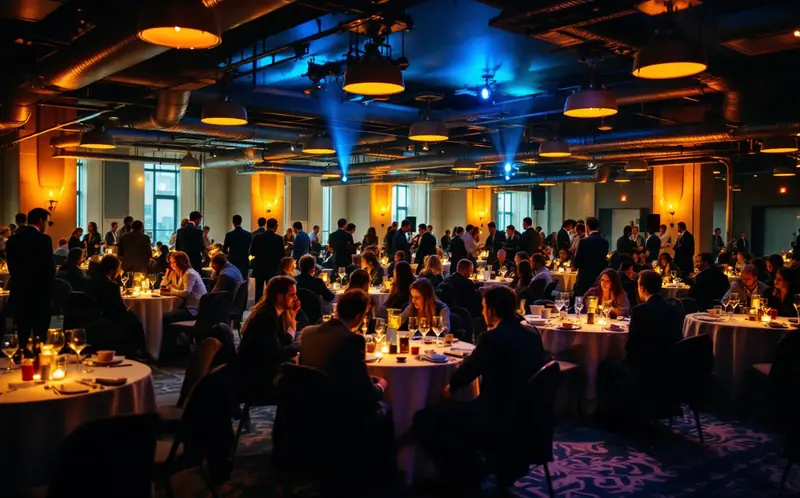
By five in the afternoon on the second day of a big show, most people have walked several miles of carpet, eaten lunch standing up and repeated the same introduction forty times. Then the evening starts. There is a reception in a function room, a networking hour sponsored by a supplier, an alumni gathering, a section dinner, a company's invitation-only evening for customers. People who skip all of it and go back to the hotel are not wrong, but they miss part of what the trip was for.
This guide is about the evening side of industry events: what it is for, how it works, how to make it useful, and how to get through it with your reputation and your night's sleep intact.
What receptions are for
The day on the floor is transactional. You stop at a booth, ask about a product, take a card and move on. The evening is slower. People have time to talk about what they actually work on, what has gone wrong on their last project, who in their company you should really be speaking to. Relationships that later turn into a job offer, a supplier contract or a phone call for advice in a bad week very often start in a room like this, over a plate of small sandwiches.
Most evenings fall into a few types:
| Type | Who can attend | What it is like |
|---|---|---|
| Open reception | Anyone with a show or conference badge | Big, loud, short conversations, good for meeting many people |
| Association or section evening | Members and guests | Smaller, people from the same region or discipline |
| Company customer evening | By invitation only | Hosted by one firm for its clients and prospects |
| Student or young professional mixer | Students, early-career staff, recruiters | Informal, often with short talks from senior people |
| Small dinner | A handful of named guests | Seated, longer conversations, more personal |
Badges and invitations
Open receptions are usually listed in the show program and admit anyone wearing the right badge. Check which badge types are included; some evenings are for conference delegates only, not exhibition visitors. The guide to trade show registration and badges explains the differences.
Company evenings work by invitation. If you receive one, reply so the host can plan numbers, and do not bring a colleague unless the invitation says you may. If you were not invited, do not try to talk your way in at the door. It is a small industry, and the person on the door may well be someone you will meet across a table next year.
Starting a conversation
Most people at these events find the first approach awkward, including the ones who look relaxed. A few things help.
- Look for groups of two or three standing slightly open, not a tight circle deep in conversation.
- Lead with the event, not with yourself: "What did you think of the morning session on compression?" or "Which hall have you spent most of your time in?"
- Say what you do in one plain sentence. "I'm a field technician on a gas gathering system outside Corpus" lands better than a job title nobody outside your company understands.
- Ask about their work and listen to the answer. People remember who listened to them far longer than who talked well.
Read the badge before you guess a name, but do not stare at it. If you forget a name halfway through, admit it and ask again. Everyone has done it.
Ending a conversation well
Leaving is harder than arriving. Twenty minutes with one person is usually enough at a reception, even a good conversation. A clean exit is short and honest: "I promised myself I'd meet a few of the pipeline people tonight, so I'll let you go. Can I send you a note next week about that valve issue?" Shake hands, swap cards if it makes sense, and move off. If someone is clearly stuck with you and looking over your shoulder, let them go first.
Business cards and follow-up
Cards are still common in this business, and a phone with a contact-sharing app or a networking site profile does the same job. The card is only useful if you remember why you took it. A habit that works: step aside after each conversation and write two lines on the back of the card or in a phone note. Who they are, what you talked about, what you promised.
Then follow up within a week, while you are both still in the show's afterglow. A short email or networking message is enough:
Good to meet you at Tuesday's reception. You mentioned your team was trialing a new pig launcher design on the gathering lines. I'd be glad to hear how it goes. Here's the article on corrosion monitoring I mentioned.
That message names the event, recalls something specific and offers something small. It does not ask for anything. Do not add a new contact to a mailing list just because you have their card; a follow-up note is one thing, marketing email is another, and the rules on commercial email are strict in many countries.
Alcohol and professional conduct
Many receptions serve alcohol. Nobody is required to drink, and nobody worth knowing will mind if you hold a soft drink or a coffee all evening. Plenty of people in this industry do, for safety-sensitive jobs, health, religion or simply preference.
A working evening is still work. A few rules hold up well:
- Eat something early. Reception food tends to run out, and an empty stomach makes everything else harder.
- Decide your limit before you arrive, not at the bar.
- Remember your badge has your name and your employer on it. You are representing them all evening.
- Keep talk about confidential projects, contract terms and colleagues out of earshot of strangers. Conversations carry further in a crowded room than people think.
- Know your company's code of conduct and its policy on gifts and hospitality, and stick to it. Many employers limit what you can accept from suppliers, and some forbid it.
- Treat staff and other guests with courtesy. Unwanted attention, crude jokes and pressure to drink have no place at a professional event. If you see a colleague in trouble, help them leave.
The morning after matters too. Many people have a booth shift, a session or a flight. Being sharp at eight the next day is part of the job.
Getting home safely
Plan the ride back before the evening starts, not at the end of it.
- Do not drive after drinking. Not a short distance, not on quiet roads, not once.
- Use public transit, a taxi or a ride-hailing service, or walk back with colleagues if the route is short and well lit.
- Know the address of your hotel and keep your phone charged. A small battery pack in a jacket pocket earns its place.
- If you are traveling alone in an unfamiliar city, tell a colleague when you are leaving and text when you are back.
- Keep your badge out of sight on the street; it advertises that you are a visitor.
If someone becomes seriously unwell, call the local emergency number: 911 in North America, 999 in the UK, 112 in the EU. Stay with them until help arrives. For more on travel, transport and timing around a show, see the guide to planning a trip to an energy trade show.
Hosting a small client dinner
At some point you may be the one doing the inviting. A small dinner, four to eight people, often does more good than a big reception, because everyone can actually talk.
A worked example, illustrative only: a supplier's account manager invites two operators' engineers and a colleague from the technical team. The invitation goes out two weeks ahead and says plainly who else is coming and roughly when the evening will end. The engineers' own companies have rules on accepting hospitality, so the invitation leaves room to decline without awkwardness, and the host checks the company's own policy first. At the table, the technical colleague answers real questions and nobody pulls out a slide deck. The evening ends on time, everyone has transport arranged, and the follow-up email the next week thanks people and sends the one document that was asked for.
The test of a good industry evening, as a guest or a host, is simple: would you be comfortable if your manager, your customer and your family heard exactly what you said and saw exactly how you got home? For more on the other kinds of events around a show, the industry events guide covers them in turn.